|
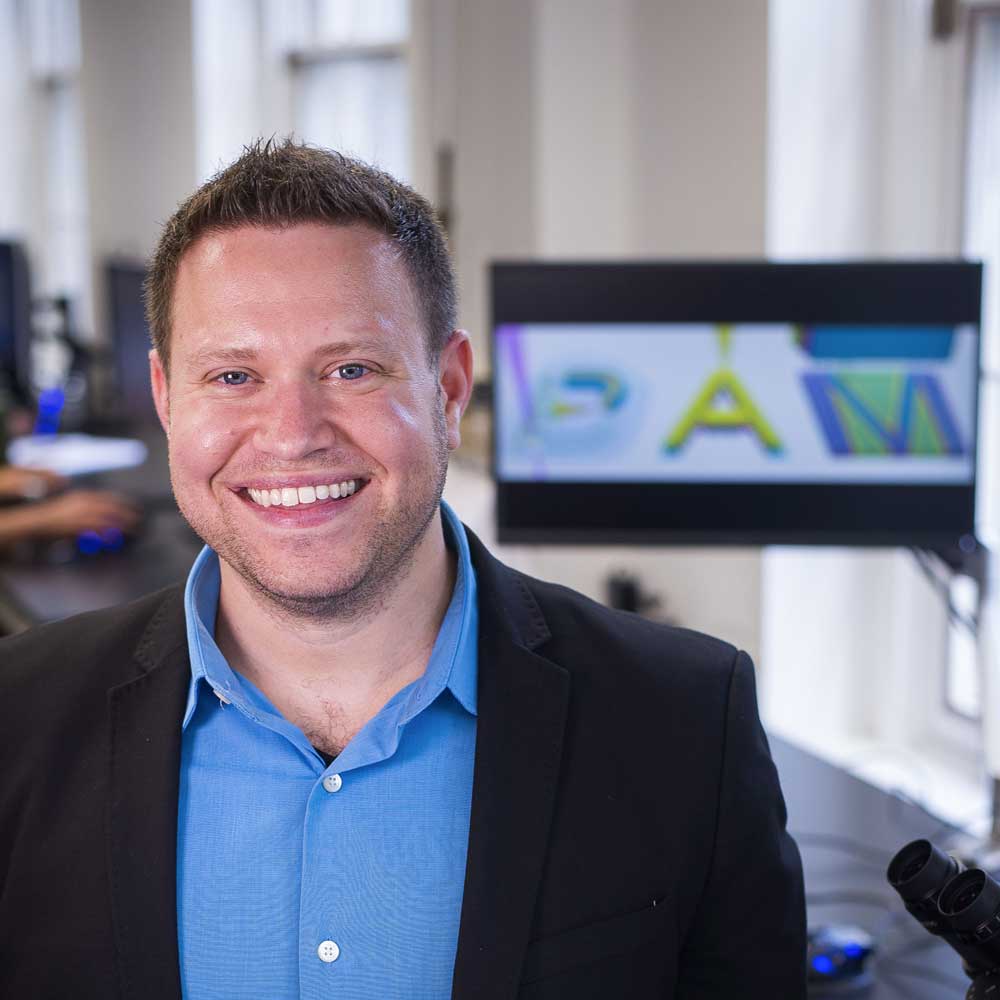
Associate Professor Ryan Sochol has been named Director of the Maryland Robotics Center (MRC) at the University of Maryland (UMD), after serving as interim director since July 2025. Dean Samuel Graham of UMD’s A. James Clark School of Engineering announced the appointment on Tuesday (August 25).
“We are excited to see where he takes our nationally recognized program,” Graham wrote in a message to the UMD community. For 2025–2026, CSRankings placed UMD robotics at #4 in the U.S.
A pioneering researcher whose soft robotics focus cuts across several engineering disciplines, Sochol brings with him a track record of bold innovation honed at his Bioinspired Advanced Manufacturing (BAM) Laboratory, which for more than a decade has pushed the technological envelope with its pioneering micro- and nanoscale additive manufacturing strategies for biomedical applications, including medical/surgical robotics. He currently leads a $2.7 million National Institutes of Health project 3D nanoprinting soft microrobotic systems for minimally invasive neurosurgery, which leverages his recently acquired state-of-the-art 3D nanoprinter, with his team’s recent work currently featured on the front cover of Advanced Robotics Research.
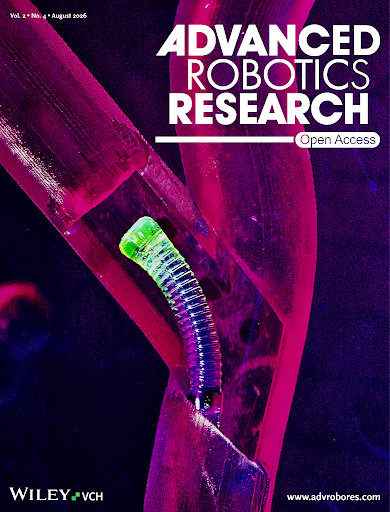
Front cover of the August 2026 issue of the journal Advanced Robotics Research, showcasing Sochol’s team’s 3D-nanoprinted soft robotic microcatheters for endovascular interventions.
He holds joint appointments in the Department of Mechanical Engineering and the Institute of Systems Research (ISR), as well as an affiliate appointment in the Fischell Department of Bioengineering, and is a Fischell Institute Fellow within the Robert E. Fischell Institute for Biomedical Devices.
Building on the legacy of distinguished MRC directors, including professors Satyandra K. Gupta, Nuno Martins, Sarah Bergbreiter, Miao Yu, and most recently, Derek Paley, Sochol now steps into the role to further elevate the center’s impact in robotics research, education, and interdisciplinary collaboration.
Housed at the ISR, the MRC comprises more than 50 faculty members from across UMD who work to advance areas such as autonomous systems, unmanned vehicles, human-robot interaction, multi-agent and swarm robotics, and medical, bioinspired, and micro/nanoscale robotics. The MRC also offers graduate-level robotics degree and certificate programs through Maryland Applied Graduate Engineering, an undergraduate minor in robotics and autonomous systems, and high school summer as well as internship programs.
“The MRC represents the very best of what a university can enable, from cutting-edge research and interdisciplinary collaboration to transformative educational opportunities for our students and the community,” Sochol said. “I’m honored to help lead the MRC into its next chapter and excited to support our community as we push the boundaries of robotics in ways that benefit science, engineering, and society.”
Wide Recognition for BAM Lab Breakthroughs
A mounting succession of accolades bears testimony to the innovative work Sochol is leading at UMD. He has been recognized with a National Science Foundation (NSF) Faculty Early Career Development Program (CAREER) Award, the Journal of Micromechanics and Microengineering’s Early Career Award, and the E. Robert Kent Outstanding Teaching Award for Junior Faculty. In addition, he has been named an American Society of Mechanical Engineering (ASME) Rising Star of Mechanical Engineering, an Advanced Materials Technologies Rising Star, and an Emerging Leader in Micromechanics and Microengineering.
Sochol’s research group has also been recognized with International Conference on Micro Electro Mechanical Systems (IEEE MEMS) Outstanding Paper Awards in 2019, 2021, and 2025, Microsystems & Nanoengineering/Springer Nature Outstanding Paper and Presentation Award honors in 2022, 2024, 2025, and 2026 at both the International Conference on Miniaturized Systems for Chemistry and Life Sciences—Micro-Total Analysis Systems (µTAS) and the Solid-State Sensors, Actuators, and Microsystems Workshop (Hilton Head Workshop).
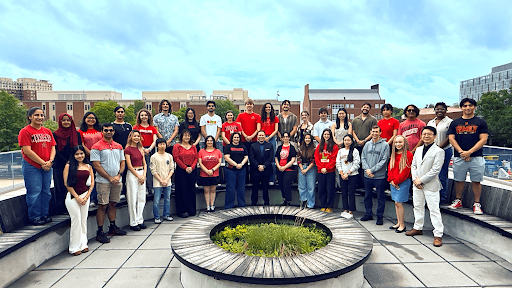
Sochol alongside researchers from his Bioinspired Advanced Manufacturing (BAM) Laboratory at UMD
He is also noted for his success in bridging the worlds of engineering and popular culture, receiving international media coverage for his integration of video games into robotics research and education, as seen in his Science Advances cover article demonstrating a 3D-printed soft robotic hand capable of playing Super Mario Bros. and his course “The Legend of Zelda: A Link to Machine Design”, in which students build transforming bioinspired robots using Nintendo’s “The Legend of Zelda: Tears of the Kingdom” video game.
Sochol received his B.S. in mechanical engineering from Northwestern University in 2006, and both his M.S. and Ph.D. in mechanical engineering from the University of California, Berkeley, in 2009 and 2011, respectively, with Doctoral Minors in bioengineering and public health. Following postdoctoral training at the University of Tokyo, the University of California, Berkeley, the Harvard-MIT Division of Health Sciences & Technology, Harvard Medical School, and Brigham & Women’s Hospital, Sochol joined the faculty at UMD in 2015.
His professional service to the engineering field includes co-chairing the Hilton Head Workshop 2026 (during which he DJ’d the conference banquet), and co-editorship of the "3D-Printed Soft Robots" collection in the Nature family journal, npj Robotics.
August 25, 2026
|